PICO has officially unveiled PICO OS 6, its next-generation spatial operating system, alongside an early preview of its upcoming flagship XR headset, internally codenamed Project Swan.
More than a routine software update, PICO OS 6 represents a fundamental reconstruction of the spatial computing experience, designed to eliminate long-standing friction between 2D apps, 3D content, and mixed reality environments.
A Ground-Up Rebuild of Spatial Computing
Unlike incremental updates of the past, PICO OS 6 has been rearchitected from the core. The system addresses one of XR’s biggest challenges: enabling 2D applications, immersive 3D experiences, virtual spaces, and physical surroundings to coexist seamlessly in one unified interface.
At the heart of this transformation is the PICO Spatial Engine, a breakthrough rendering architecture developed over the past two years. Traditionally, rendering processes were siloed within individual apps, often limiting performance and integration.
PICO Spatial Engine shifts the rendering pipeline to the operating system level, allowing simultaneous rendering of multiple 2D windows, 3D applications, and real-world passthrough environments — all while maintaining responsiveness.
The result is a cohesive spatial environment where digital elements blend naturally into physical space, creating a fluid and uninterrupted workflow.
Spatial Multitasking: A Productivity Leap
Built on this unified engine, PICO OS 6 introduces advanced spatial multitasking. Users can now collaborate on complex 3D models with remote colleagues represented as avatars, while keeping browsers, documents, and notes open in floating windows above their physical workspace.
The input system has also been refined to eliminate rigid modes. Users can navigate with intuitive look-and-pinch gestures, switch to XR controllers for gaming, or connect a keyboard and mouse for productivity tasks. This adaptive input design ensures a frictionless transition between work and play.
For the more than 2,600 enterprise institutions served by PICO, this development provides a stable, high-performance environment for professional collaboration, training simulations, and immersive design workflows.
An Open and Inclusive Ecosystem
PICO OS 6 is built on openness. Rather than restricting developers to a closed ecosystem, the platform supports Spatial apps, OpenXR, WebXR, Android apps, web applications, and PC VR streaming as equal components of the system.
This inclusive philosophy lowers barriers to entry and allows developers to bring existing tools and frameworks into the spatial computing world. By unifying multiple ecosystems under one operating system, PICO aims to create a seamless experience for both developers and end users.
A Comprehensive Toolkit for Developers
To accelerate adoption, PICO has introduced the PICO Spatial SDK (Kotlin) and a redesigned UI system featuring component-based APIs and runtime adaptation. The PICO Spatial Plugin for Android Studio and a new desktop-based PICO Emulator enable rapid development and testing without requiring a physical headset.
In addition, PICO is democratizing spatial computing with WebSpatial, an open-source framework that extends standard web tools such as HTML, CSS, and React into XR environments. This framework supports cross-platform, install-free applications compatible with PICO OS, VisionOS, and AndroidXR.
Enhanced integration with Unity and Unreal Engine further expands possibilities. Developers can now create mixed reality games that run alongside other apps, allowing users to game while video chatting or browsing in floating windows — a true multitasking breakthrough.
Project Swan: Powering the Vision
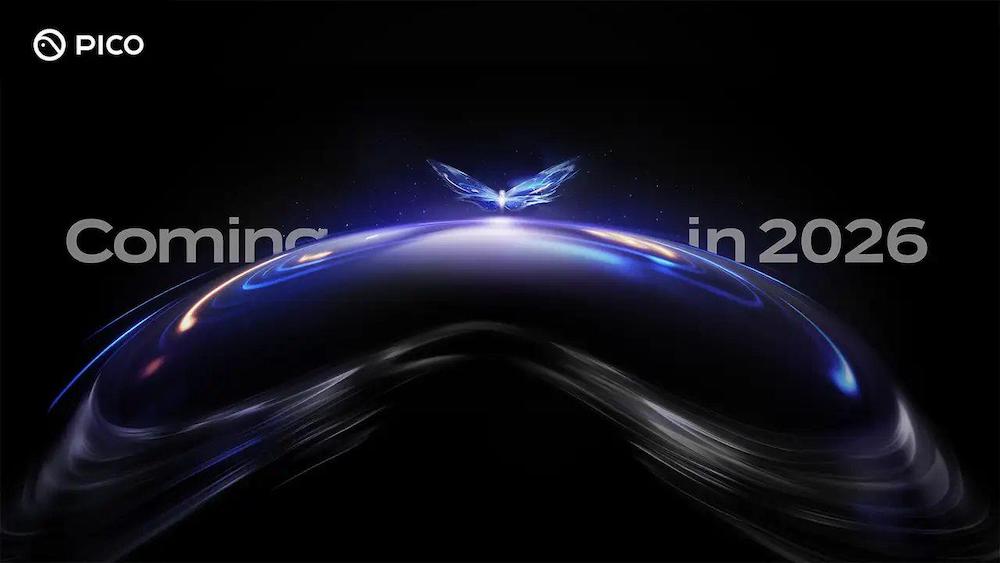
While PICO OS 6 lays the software foundation, Project Swan represents the hardware leap needed to unlock its full potential. Targeted for a global launch in late 2026, Project Swan addresses two major industry bottlenecks: clarity and mixed reality performance.
The headset features next-generation MicroOLED displays with nearly 4000 PPI — approximately nine times the pixel density of flagship smartphones. With an average 40 Pixels Per Degree (PPD) and a center sweet spot exceeding 45 PPD, text clarity is sharp enough for professional tasks such as coding and document editing.
Project Swan also introduces a dual-chip architecture to optimize mixed reality performance. A custom XR chip powers perception and imaging engines, fusing sensor data to construct a realistic physical world representation with just 12 milliseconds of latency. Paired with a flagship SoC delivering more than double the CPU and GPU performance of the XR2 Gen 2, the device promises a significant performance upgrade.
Global Early Access Program

To ensure seamless synergy between software and hardware, PICO has launched the PICO Global Early Access Program. The initiative invites experienced users and developers to participate in a closed beta for PICO OS 6 and Project Swan. By gathering rigorous technical feedback, PICO aims to refine the system ahead of its global release.
With PICO OS 6 and Project Swan, PICO is not merely updating its product line — it is redefining how spatial computing integrates into daily life, work, and entertainment. The next generation of XR is on the horizon, and early adopters now have the opportunity to help shape it.
For more information, visit PICO’s official website.
Keywords:
- PICO OS 6, Project Swan
- XR headset,
- PICO Spatial Engine,
- PICO Global Early Access Program,
- MicroOLED 4000 PPI headset,
- spatial computing OS,
- mixed reality hardware 2026,
- PICO developer SDK