
According to the latest findings from Klook Travel Pulse 2026 survey, Malaysians are set to increase their travel spending by 15% this year, marking one of the highest growth rates in Southeast Asia.
Despite this rise in budget, affordability remains a key consideration. In fact, more than half of Malaysians continue to prioritise cost when choosing their travel destinations, highlighting a growing trend of value-conscious travel planning.
Affordability Still Leads Travel Decisions
Even as travel budgets expand, Malaysians are becoming more disciplined in managing their expenses. The survey revealed that 56.1% of travellers rank affordability as their top priority when selecting a destination.
This trend is especially evident among younger travellers. Malaysian Gen Z, in particular, are highly budget-focused, with 45.6% emphasising the importance of staying within financial limits.
Rather than cutting back on travel altogether, Malaysians are instead making smarter choices—balancing cost with meaningful experiences.
AI Helps Travellers Save Smarter
Technology is playing a growing role in shaping travel decisions. Malaysians are increasingly turning to Artificial Intelligence (AI) tools to optimise their travel planning.
The report shows that 41.3% of Malaysians use AI to determine the best time to book flights and accommodations, helping them secure better deals. Additionally, 57.2% rely on AI to research destinations, while 54.1% use it to discover activities.
This shift highlights how AI is no longer just a convenience—it has become a practical tool for making cost-effective and informed travel decisions.
Japan and China Lead Travel Interest
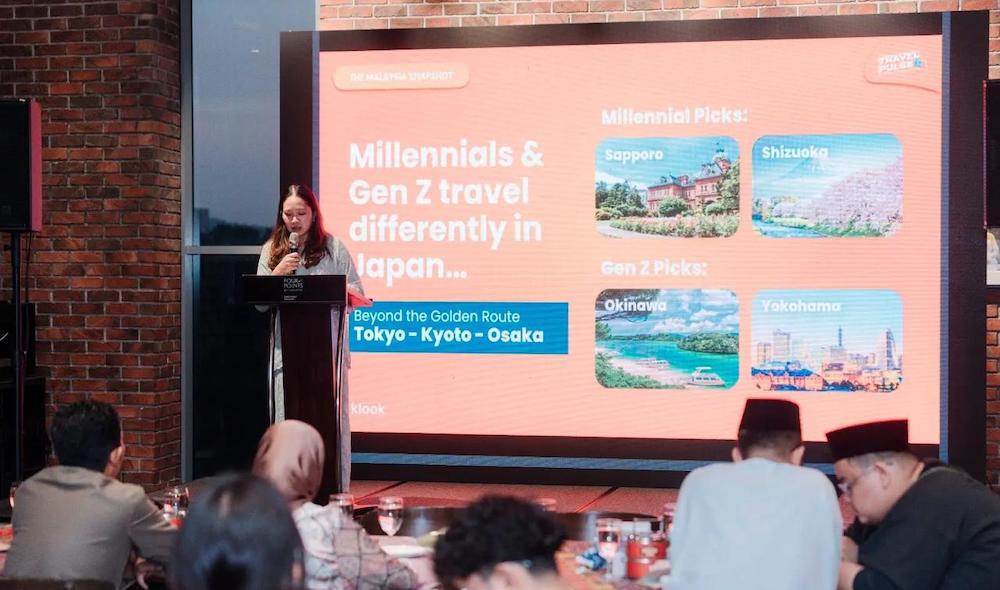
In terms of preferred destinations, Japan remains the top choice for Malaysian travellers, attracting 27.2% of interest. This is followed by China at 13.1% and Australia at 6.9%.
However, the way Malaysians explore these destinations is evolving. Instead of focusing solely on popular tourist hubs, travellers are venturing into less conventional locations.
In Japan, Millennials are showing interest in secondary cities such as Sapporo and Shizuoka. Meanwhile, Gen Z travellers are exploring emerging hotspots like Okinawa and Yokohama.
A similar trend can be seen in China. While Millennials continue to favour major cities like Beijing and Shanghai, Gen Z travellers are gravitating towards newer urban destinations such as Chongqing and Guangzhou.
Social Media and Content Creators Drive Inspiration
Social media continues to play a powerful role in influencing travel decisions. According to the survey, 78.9% of Malaysians have booked a travel experience based on recommendations from content creators.
This reflects a shift in how travellers discover destinations, with platforms like Instagram, TikTok, and YouTube becoming key sources of inspiration.
Interestingly, different generations consume content differently. Millennials are more influenced by visually appealing photos and videos, while Gen Z prefers practical content such as travel tips, hacks, and itinerary guides.
A Growing Demand for Meaningful Travel
Beyond affordability and convenience, Malaysians—especially younger travellers—are increasingly seeking meaningful travel experiences.
Malaysian Gen Z travellers are more likely to prioritise purpose-driven travel compared to the global average. Around 38% of Gen Z respondents emphasise the importance of meaningful experiences when planning trips.
This is reflected in their preference for immersive activities, such as local tours, guided experiences, and cultural festivals. Rather than traditional sightseeing, they are looking for deeper connections with destinations.
Different Travel Styles Across Generations
The survey also highlights distinct differences between Millennials and Gen Z in how they approach travel.
While both groups rank food-related experiences—such as food tours and tastings—as their top choice, Millennials tend to favour structured activities like guided tours. On the other hand, Gen Z travellers are more drawn to unique, time-sensitive attractions such as auroras or cherry blossom seasons.
These differences underline the evolving nature of travel preferences and the importance of offering diverse experiences to cater to different audiences.
Smarter, More Intentional Travel in 2026
Overall, the findings from Klook’s Travel Pulse 2026 report paint a clear picture: Malaysians are not just travelling more—they are travelling smarter.
By balancing affordability with meaningful experiences, leveraging AI for better planning, and exploring new destinations, travellers are redefining what it means to travel in 2026.
As the travel landscape continues to evolve, one thing is certain—Malaysians are embracing a more intentional and value-driven approach to their journeys.
Keywords:
- Klook Travel Pulse 2026
- Malaysia travel trends 2026
- Malaysian travel spending increase
- Gen Z travel Malaysia
- AI travel planning Malaysia
- affordable travel destinations Malaysia
- Japan travel Malaysia trends
- China travel Malaysia trends
- travel behaviour Southeast Asia